

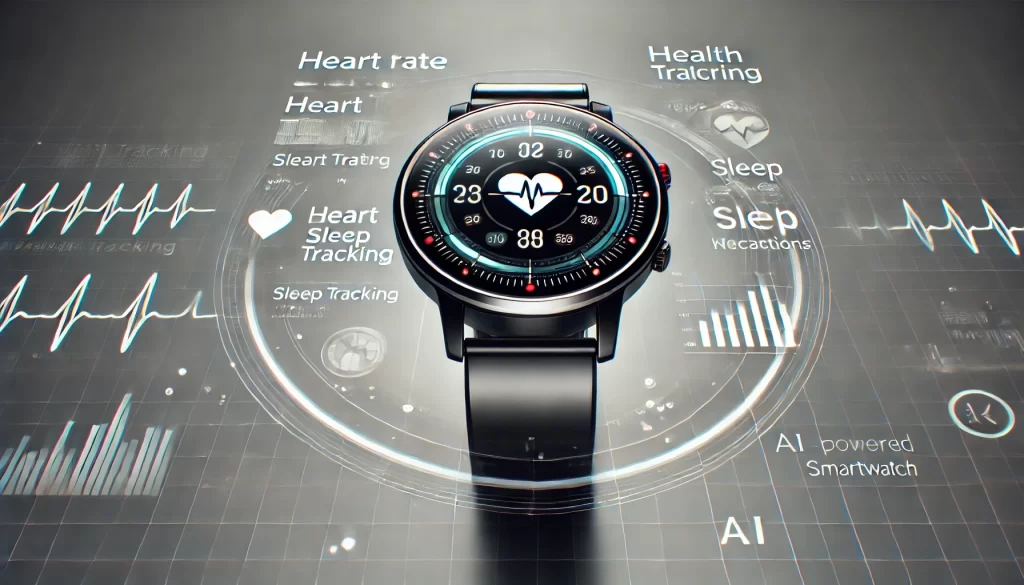
*AI-generated illustration depicting advanced smartwatch technology and health monitoring features
Welcome to the Future of Wearable Technology
Your comprehensive guide to understanding AI-powered smartwatches and their revolutionary impact on personal health monitoring
The landscape of wearable technology is experiencing an unprecedented transformation.
Artificial intelligence integration has revolutionized smartwatches from simple timepieces into sophisticated health monitoring devices that serve as personal wellness assistants. These advanced wearables now offer real-time health insights, personalized recommendations, and predictive analytics that were once confined to medical facilities.
In this comprehensive guide, we’ll explore the cutting-edge features, market trends, and future innovations that are reshaping the smartwatch industry. Whether you’re a technology enthusiast, health-conscious individual, or simply curious about the latest developments in wearable AI, this article provides valuable insights into the revolutionary world of intelligent timepieces.
📊 Global Wearable AI Market Insights
The global wearable artificial intelligence market is experiencing remarkable expansion, with industry analysts projecting substantial growth from $38.1 billion in 2023 to an estimated $200.8 billion by 2032. This impressive trajectory represents a compound annual growth rate (CAGR) of 20.5%, driven primarily by increasing consumer demand for sophisticated health monitoring solutions and advanced AI-powered features.
This exponential growth reflects the growing integration of machine learning algorithms, advanced sensors, and cloud computing technologies in consumer wearables, positioning AI smartwatches as essential tools for modern healthcare management.
🚀 Revolutionary Trends Shaping AI-Powered Smartwatches
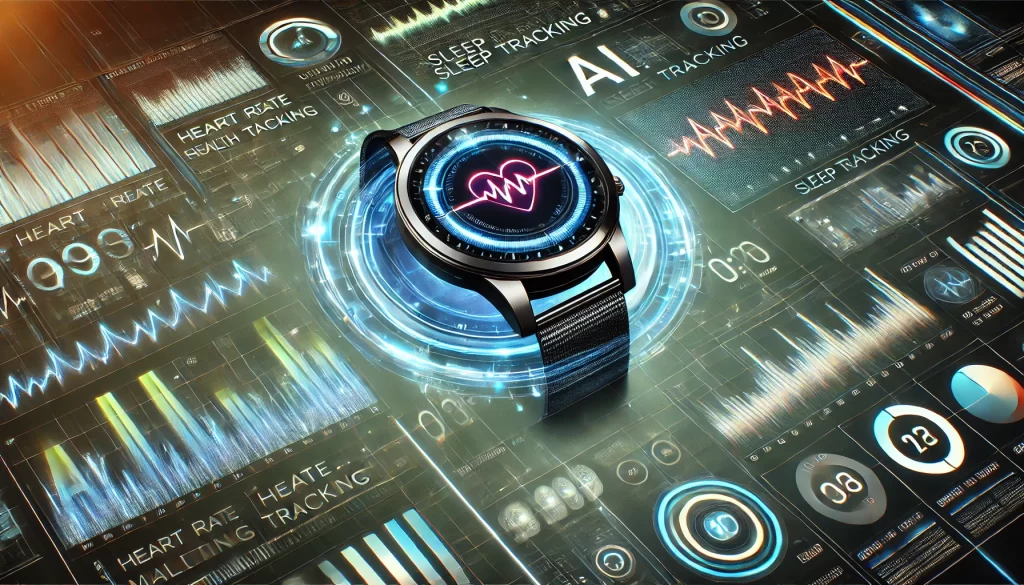
*AI-generated visualization of smartwatch health analytics and trend monitoring dashboard
Understanding Modern Smartwatch AI Capabilities
Contemporary AI-powered smartwatches represent a significant leap forward in wearable technology innovation. These devices incorporate sophisticated machine learning algorithms that continuously analyze user behavior patterns, physiological data, and environmental factors to deliver personalized insights and recommendations.
The integration of artificial intelligence in smartwatches has enabled unprecedented capabilities in health monitoring, including advanced sleep analysis, stress detection through heart rate variability, and even early warning systems for potential health issues. Modern devices can now distinguish between different types of physical activities, automatically detect workout routines, and provide real-time coaching based on individual fitness levels and goals.
Personalization has emerged as a cornerstone of the smartwatch experience, with AI algorithms learning user preferences to customize everything from notification filtering to activity suggestions. This adaptive approach ensures that each device becomes uniquely tailored to its wearer’s lifestyle, preferences, and health objectives.
AI-Driven Health Monitoring Revolution
Recent technological breakthroughs have positioned AI-powered smartwatches at the forefront of preventive healthcare. Advanced machine learning models can now analyze complex patterns in biometric data to identify potential health concerns before they become critical issues.
Research indicates that sophisticated AI algorithms trained on extensive health datasets can predict various medical conditions with remarkable accuracy. These systems analyze multiple data points simultaneously, including heart rate patterns, sleep quality metrics, activity levels, and even subtle changes in movement patterns that might indicate emerging health issues.
| AI Technology Integration | Primary Health Benefits | User Impact |
|---|---|---|
| Intelligent health monitoring algorithms | Comprehensive preventive health tracking | Early detection of potential health issues |
| Personalized activity recommendations | Optimized fitness performance enhancement | Improved physical wellness outcomes |
| Predictive health alert systems | Proactive health issue prevention | Reduced healthcare costs and improved quality of life |
🔗 Scientific Research Reference:
MacRumors Technology Report – Advanced Apple Watch AI Model Demonstrates Ability to Identify Hidden Health Conditions
🧠 Comprehensive AI Features Transforming Smartwatch Technology
Advanced Sensor Integration and Machine Learning
Modern AI-powered smartwatches incorporate an impressive array of sophisticated sensors working in harmony with machine learning algorithms to deliver unprecedented health monitoring capabilities. These devices typically include electrocardiogram (ECG) sensors for heart rhythm analysis, blood oxygen saturation (SpO2) monitors, advanced temperature sensors, hydration level detectors, and precision motion sensors.
The integration of these multiple sensor systems with artificial intelligence creates a comprehensive health monitoring ecosystem that operates continuously in the background. Machine learning algorithms process this constant stream of biometric data to identify patterns, detect anomalies, and provide actionable insights that help users make informed decisions about their health and wellness.
What sets modern AI smartwatches apart is their ability to learn and adapt to individual users over time. The artificial intelligence systems become increasingly accurate at predicting user needs, identifying potential health concerns, and providing personalized recommendations as they gather more data about individual behavior patterns and physiological responses.
Revolutionary AI-Powered Features
Today’s AI-enabled smartwatches offer an extensive range of intelligent features that extend far beyond basic fitness tracking:
- Advanced Biometric Analysis: Sophisticated AI algorithms continuously monitor and analyze vital signs including heart rate variability, blood pressure trends, and sleep architecture patterns to provide comprehensive health insights and early warning indicators for potential medical concerns.
- Intelligent Virtual Assistant Integration: Natural language processing capabilities enable seamless voice interactions for hands-free communication, including making phone calls, sending text messages, controlling smart home devices, and accessing information through conversational queries.
- Predictive Weather Intelligence: Machine learning models analyze multiple meteorological data sources, personal activity patterns, and location information to deliver highly accurate, personalized weather forecasts and activity recommendations based on expected conditions.
- Smart Notification Management: AI-powered filtering systems learn user preferences and behavior patterns to prioritize truly important notifications while minimizing distractions from less relevant alerts, creating a more focused and productive user experience.
- Adaptive Fitness Coaching: Personalized training programs that evolve based on individual progress, recovery patterns, and performance metrics, providing real-time guidance and motivation to optimize workout effectiveness and prevent overexertion or injury.
💡 Real-World AI Application Example:
Consider a scenario where your AI-powered smartwatch detects elevated stress levels through continuous heart rate variability monitoring and movement pattern analysis. The device’s machine learning algorithms recognize this physiological state and automatically suggest personalized stress-reduction techniques, such as guided breathing exercises or mindfulness sessions, while also adjusting your daily activity recommendations to promote recovery and well-being.
🔮 The Evolving Landscape of Wearable Technology Innovation
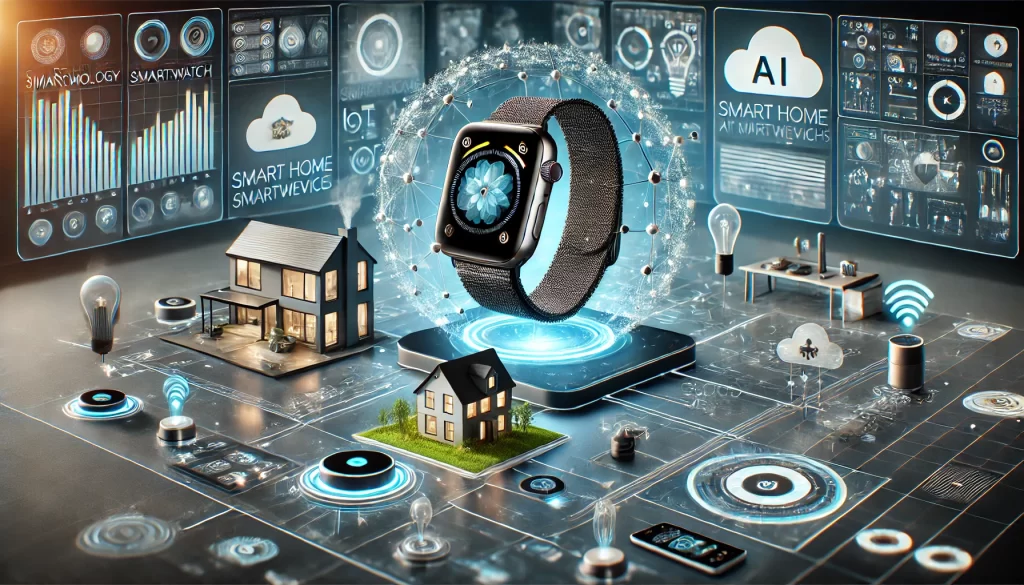
*AI-generated concept visualization of future wearable technology ecosystem and IoT connectivity
The Expanding Universe of Wearable Technology
Wearable technology encompasses a rapidly expanding ecosystem of intelligent devices designed to seamlessly integrate into daily life while providing continuous monitoring and enhanced functionality. This category includes not only smartwatches but also fitness trackers, smart rings, intelligent clothing, augmented reality glasses, and even implantable health monitors.
The current technological landscape is witnessing unprecedented innovation in wearable devices, with significant advancements in miniaturization, battery technology, wireless connectivity, and artificial intelligence integration. These improvements are enabling the development of more sophisticated, longer-lasting, and more capable wearable devices that can perform complex computational tasks while maintaining comfortable, unobtrusive form factors.
Industry experts predict that the convergence of 5G connectivity, edge computing, advanced biosensors, and artificial intelligence will create entirely new categories of wearable applications. These emerging technologies will enable real-time health monitoring, predictive analytics, and seamless integration with broader Internet of Things (IoT) ecosystems.
Cutting-Edge Technological Innovations
The wearable technology sector is experiencing rapid advancement across multiple technological fronts, with several key innovations driving the next generation of intelligent devices:
| Innovation Category | Technological Advancement | Expected Impact on Users |
|---|---|---|
| Advanced Health Monitoring | Continuous glucose monitoring, blood pressure tracking, and comprehensive sleep architecture analysis | Preventive healthcare management and early disease detection capabilities |
| Artificial Intelligence Integration | Personalized health recommendations, predictive analytics, and adaptive user interfaces | Customized wellness coaching and proactive health management |
| Enhanced Connectivity Solutions | 5G integration, improved Bluetooth capabilities, and seamless IoT device communication | Real-time data synchronization and comprehensive ecosystem integration |
🔗 Market Research Reference:
Grand View Research Analysis – Comprehensive Global Wearable AI Market Size & Growth Trends Report Through 2030
❤️ Revolutionary Health Monitoring Capabilities in AI Smartwatches
The Science Behind AI-Powered Health Monitoring
AI-enabled smartwatches represent a paradigm shift in personal health monitoring, utilizing sophisticated algorithms to continuously analyze physiological data and identify patterns that might indicate potential health concerns. These devices employ advanced machine learning techniques to process vast amounts of biometric information, including heart rate patterns, sleep cycles, activity levels, and even subtle changes in skin temperature or conductance.
The integration of artificial intelligence in health monitoring enables these devices to distinguish between normal physiological variations and potentially concerning anomalies. For example, AI algorithms can differentiate between temporary heart rate elevation due to physical activity versus irregular patterns that might suggest cardiac arrhythmias such as atrial fibrillation, tachycardia, or bradycardia.
Research in the field of wearable health technology has demonstrated that continuous monitoring through AI-powered devices can provide valuable early warning systems for various medical conditions. This capability represents a significant advancement in preventive healthcare, potentially allowing individuals to seek medical attention before conditions become critical.
Comprehensive Health Metrics and Analysis
Modern AI smartwatches utilize state-of-the-art sensor technology to track an extensive range of health and wellness metrics:
- Cardiovascular Monitoring: Continuous heart rate tracking with advanced algorithms that can detect irregular rhythms, monitor heart rate variability, and assess cardiovascular fitness levels through sophisticated analysis of pulse patterns and recovery rates.
- Sleep Architecture Analysis: Comprehensive sleep monitoring that goes beyond simple duration tracking to analyze sleep stages, including light sleep, deep sleep, and REM cycles, providing insights into sleep quality and offering personalized recommendations for improving rest and recovery.
- Physical Activity Assessment: Intelligent activity recognition that can automatically identify and categorize different types of exercise, accurately measure calories burned, track step counts, and monitor workout intensity while providing real-time feedback and coaching.
- Stress and Recovery Monitoring: Advanced analysis of physiological stress indicators through heart rate variability, skin conductance, and movement patterns, with AI algorithms providing personalized stress management recommendations and recovery guidance.
- Environmental Health Tracking: Integration of environmental sensors that monitor air quality, UV exposure, and ambient conditions to provide health recommendations based on external factors that might impact well-being.
🏥 Clinical Research and Validation
Recent clinical studies have demonstrated the significant potential of AI-powered wearable devices in healthcare applications. Research published in peer-reviewed medical journals indicates that smartwatch-based monitoring systems can achieve accuracy levels comparable to traditional medical equipment for certain health metrics, particularly in the areas of heart rate monitoring and activity tracking.
Furthermore, studies have shown that continuous monitoring through wearable devices can provide valuable data for medical professionals, enabling more informed treatment decisions and better patient outcomes through comprehensive long-term health trend analysis.
🔗 Clinical Research References:
PubMed Central – AI-Enabled Smartwatch Technology for Advanced Ventricular Tachycardia Detection and Prevention
Journal of the American College of Cardiology – AI-Enabled Smartwatch ECG Technology for Heart Failure Prevention and Management
📈 Comprehensive Analysis of the Wearable AI Market Landscape
Market Growth Projections and Industry Trends
The wearable artificial intelligence market is experiencing unprecedented growth across multiple industry sectors, driven by technological advances, increasing health consciousness among consumers, and growing adoption of digital health solutions. Industry analysts from leading research firms consistently project robust expansion in this sector over the coming decade.
Market research indicates that the global wearable AI market valuation is expected to experience substantial growth, with some projections suggesting the market could reach $161.71 billion by 2029, representing a compound annual growth rate of 32.1%. This remarkable growth trajectory reflects the increasing integration of artificial intelligence capabilities in consumer wearable devices and the expanding applications of these technologies in healthcare, fitness, and lifestyle management.
Several factors are contributing to this explosive market growth, including advances in sensor technology, improvements in battery life, the proliferation of 5G connectivity, and increasing consumer awareness of the benefits of continuous health monitoring. Additionally, the integration of machine learning algorithms and cloud computing capabilities has enabled more sophisticated data analysis and personalized user experiences.
Comparative Market Analysis from Leading Research Firms
| Market Research Organization | Current Market Valuation (2024) | Projected Growth Rate (CAGR) | Market Forecast Timeline |
|---|---|---|---|
| Allied Market Research | $38.1 billion | 20.5% CAGR through 2032 | $200.8 billion by 2032 |
| Market.us Research | $31.2 billion | 25.6% CAGR through 2033 | $187.3 billion by 2033 |
| Global Market Insights | $39.7 billion | 27.7% CAGR through 2034 | $215.4 billion by 2034 |
🔗 Market Research References:
The Business Research Company – Comprehensive Wearable AI Global Market Report and Analysis 2025
Allied Market Research – Detailed Wearable AI Market Forecast and Analysis Through 2032
🏢 Industry Leaders Driving AI Smartwatch Innovation
Major Technology Companies Shaping the Market
The AI smartwatch market is dominated by several major technology companies that are continuously pushing the boundaries of wearable technology innovation. These industry leaders are investing heavily in research and development to create increasingly sophisticated devices that combine advanced hardware capabilities with cutting-edge artificial intelligence software.
Samsung has emerged as a significant player in the AI smartwatch market with its Galaxy Watch series, which features advanced Galaxy AI-powered health and fitness tracking capabilities along with intelligent communication tools. The company’s latest devices incorporate sophisticated biometric sensors, machine learning algorithms, and seamless integration with the broader Samsung ecosystem of connected devices.
Apple continues to lead innovation in the smartwatch sector with its Apple Watch series, which has achieved remarkable success in integrating AI-powered health monitoring capabilities. Recent developments include AI models that can analyze passive behavioral and biometric signals to predict various health conditions with impressive accuracy rates, representing a significant milestone in consumer health technology.
🎯 Breakthrough in Health Prediction Accuracy
Recent research has demonstrated that advanced AI models integrated into smartwatches can achieve up to 92% accuracy in predicting various health conditions through analysis of behavioral patterns and biometric data. This remarkable achievement represents a significant leap forward in wearable health technology and has the potential to transform preventive healthcare approaches by enabling early detection and intervention for a wide range of medical conditions.
❓ Frequently Asked Questions About AI-Powered Smartwatches
How does artificial intelligence enhance health monitoring capabilities in modern smartwatches?
Artificial intelligence significantly enhances smartwatch health monitoring by analyzing complex patterns in biometric data that would be impossible for humans to detect manually. AI algorithms can process continuous streams of physiological information, including heart rate patterns, sleep cycles, activity levels, and stress indicators, to identify subtle changes that might indicate emerging health concerns. These systems learn from individual user patterns over time, becoming increasingly accurate at providing personalized health insights and preventive recommendations.
Are AI-powered smartwatches suitable for medical-grade health monitoring?
While AI-powered smartwatches provide valuable health data and insights, they are designed to complement rather than replace professional medical care and equipment. These devices excel at continuous monitoring, trend identification, and preventive health management, but should not be used as substitutes for professional medical diagnosis or treatment. However, the data collected by these devices can be valuable for healthcare providers when making treatment decisions and monitoring patient progress over time.
What level of accuracy can users expect from health sensors in modern AI smartwatches?
Modern AI-powered smartwatches offer impressive accuracy levels, particularly for heart rate monitoring and activity tracking, with some devices achieving accuracy rates comparable to basic medical equipment. Recent advances in AI algorithms have enabled some smartwatch models to achieve up to 92% accuracy in health condition prediction through behavioral and biometric pattern analysis. However, accuracy can vary depending on factors such as device placement, user movement, and individual physiological characteristics.
How do AI algorithms in smartwatches protect user privacy and data security?
Leading smartwatch manufacturers implement comprehensive privacy and security measures to protect sensitive health data. These typically include end-to-end encryption, on-device processing of sensitive information, secure cloud storage with user consent controls, and compliance with healthcare data protection regulations such as HIPAA. Many devices also offer users granular control over data sharing and storage preferences, allowing individuals to customize their privacy settings according to their comfort level.
🌟 Future Innovations and Emerging Technologies in AI Smartwatches
Next-Generation Features and Capabilities
The future of AI-powered smartwatches promises revolutionary advancements that will further expand their capabilities and applications. Industry experts predict that emerging technologies will enable entirely new categories of functionality, from advanced medical diagnostics to augmented reality integration and seamless Internet of Things (IoT) connectivity.
The global wearable technology market is projected to grow by an estimated USD 99.4 billion from 2025 to 2029, with artificial intelligence serving as a primary catalyst for this expansion. This substantial growth will drive innovation in areas such as battery technology, sensor miniaturization, processing power, and wireless connectivity capabilities.
Emerging Technologies Shaping the Future
Several breakthrough technologies are expected to revolutionize the smartwatch industry in the coming years:
- Augmented Reality Integration: Advanced display technologies will enable smartwatches to overlay digital information directly onto the user’s field of view, providing contextual information about the environment, navigation assistance, and immersive interactive experiences.
- Advanced Wireless Power Solutions: Next-generation wireless charging technologies, including solar integration and kinetic energy harvesting, will significantly extend battery life and reduce the need for traditional charging methods.
- Biometric Security Enhancement: Multi-factor biometric authentication systems incorporating fingerprint recognition, iris scanning, and even DNA analysis will provide unprecedented security for personal data and financial transactions.
- Comprehensive IoT Ecosystem Integration: Smartwatches will serve as central control hubs for entire smart home and office environments, enabling seamless interaction with connected devices, appliances, and systems through gesture recognition and voice commands.
- Advanced Medical Diagnostics: Future devices may incorporate non-invasive blood glucose monitoring, blood pressure measurement, and even early-stage disease detection capabilities through advanced spectroscopic analysis and machine learning algorithms.
| Technology Category | Pre-AI Implementation | Advanced AI Integration | Future Potential |
|---|---|---|---|
| Health monitoring capabilities | Basic activity tracking and heart rate measurement | Comprehensive biometric analysis with predictive insights | Medical-grade diagnostics and treatment recommendations |
| User interaction methods | Simple touch screen navigation | Natural language processing and gesture recognition | Thought-controlled interfaces and neural connectivity |
| Connectivity and integration | Basic smartphone synchronization | Multi-device ecosystem coordination | Universal IoT control and autonomous decision-making |
🔗 Industry Forecast Reference:
Yahoo Finance Technology Report – Comprehensive Wearable Technology Market Growth Analysis and Projections 2025-2029
🚀 Embrace the Future of AI-Powered Health Technology
The revolution in AI-powered smartwatch technology represents an unprecedented opportunity to take control of your health and wellness journey. These sophisticated devices offer personalized insights, preventive health monitoring, and intelligent recommendations that can significantly improve your quality of life and long-term health outcomes.
Join millions of users worldwide who have already discovered the transformative power of AI-enabled wearable technology. Your healthier, more connected future starts today!
🔬 Clinical Applications and Scientific Validation of AI Wearables
Medical Research and Clinical Acceptance
The integration of artificial intelligence in wearable health technology has garnered significant attention from the medical and scientific communities. Recent research published in peer-reviewed medical journals demonstrates the growing clinical acceptance and validation of AI-powered wearable devices for various healthcare applications.
Clinical studies have shown that wearable health technology based on flexible electronics and advanced sensors has tremendous potential for continuous patient monitoring, disease management, and preventive healthcare applications. The ability to collect continuous, real-world health data outside of clinical settings provides healthcare providers with unprecedented insights into patient health patterns and treatment effectiveness.
Research indicates that AI-based wearable sensors show significant promise in digital health technology applications, including remote patient monitoring, chronic disease management, and population health studies. These devices can provide healthcare professionals with comprehensive data sets that were previously impossible to collect through traditional clinical visits and periodic assessments.
Clinical Applications and Medical Benefits
AI-powered smartwatches are being increasingly recognized for their potential in various clinical applications:
- Cardiovascular Disease Prevention: Continuous monitoring of heart rhythm irregularities, enabling early detection of conditions such as atrial fibrillation, which affects millions of people worldwide and often goes undiagnosed until serious complications occur.
- Chronic Disease Management: Long-term monitoring capabilities for conditions such as diabetes, hypertension, and heart failure, allowing healthcare providers to adjust treatment plans based on real-world patient data rather than periodic clinical snapshots.
- Remote Patient Care: Enabling healthcare providers to monitor patient recovery and treatment adherence remotely, reducing the need for frequent clinical visits while maintaining high-quality care standards.
- Clinical Research and Drug Development: Providing researchers with large-scale, continuous health data that can accelerate medical research, drug development, and clinical trial processes through more comprehensive patient monitoring.
- Preventive Healthcare Programs: Supporting population health initiatives by identifying health trends, risk factors, and intervention opportunities at both individual and community levels.
🔗 Clinical Research Reference:
PubMed Central Scientific Database – The Emergence and Clinical Validation of AI-Based Wearable Sensors for Digital Health Technology Applications
✅ Conclusion: The Transformative Impact of AI-Powered Smartwatches
AI-powered smartwatches represent a fundamental transformation in how we approach personal health monitoring, fitness management, and daily technology interaction. These sophisticated devices have evolved from simple timepieces into comprehensive health management systems that provide continuous monitoring, personalized insights, and predictive analytics capabilities that were once limited to professional medical facilities.
The market growth projections, ranging from 20% to 32% CAGR across different research firms, confirm that this technological revolution is not just a temporary trend but a fundamental shift toward more intelligent, personalized, and proactive healthcare management. The integration of artificial intelligence, advanced sensors, and machine learning algorithms has created devices that can adapt to individual users, learn from behavioral patterns, and provide increasingly accurate health predictions and recommendations.
As we look toward the future, the continued advancement of AI technology, sensor miniaturization, battery efficiency, and wireless connectivity will enable even more sophisticated capabilities. The potential for augmented reality integration, advanced medical diagnostics, and seamless IoT ecosystem connectivity promises to further expand the role of smartwatches in our daily lives and long-term health management strategies.
The scientific validation and clinical acceptance of these devices, as demonstrated by numerous peer-reviewed studies and medical research initiatives, underscores their potential to transform not only individual health management but also broader healthcare delivery systems. The ability to collect continuous, real-world health data provides unprecedented opportunities for preventive medicine, personalized treatment approaches, and population health management.
💡 Key Takeaway: The convergence of artificial intelligence, advanced sensor technology, and wearable devices represents one of the most significant healthcare innovations of our time. By embracing AI-powered smartwatch technology, individuals can take a more proactive, informed, and personalized approach to their health and wellness journey. The future of healthcare is becoming increasingly personalized, predictive, and preventive—and AI-powered smartwatches are leading this transformation.