
Reading time: 10 minutes
The controversial ChatGPT-5 rollout sparked massive user backlash over removed models, personality changes, and restricted features that disrupted millions of workflows worldwide.

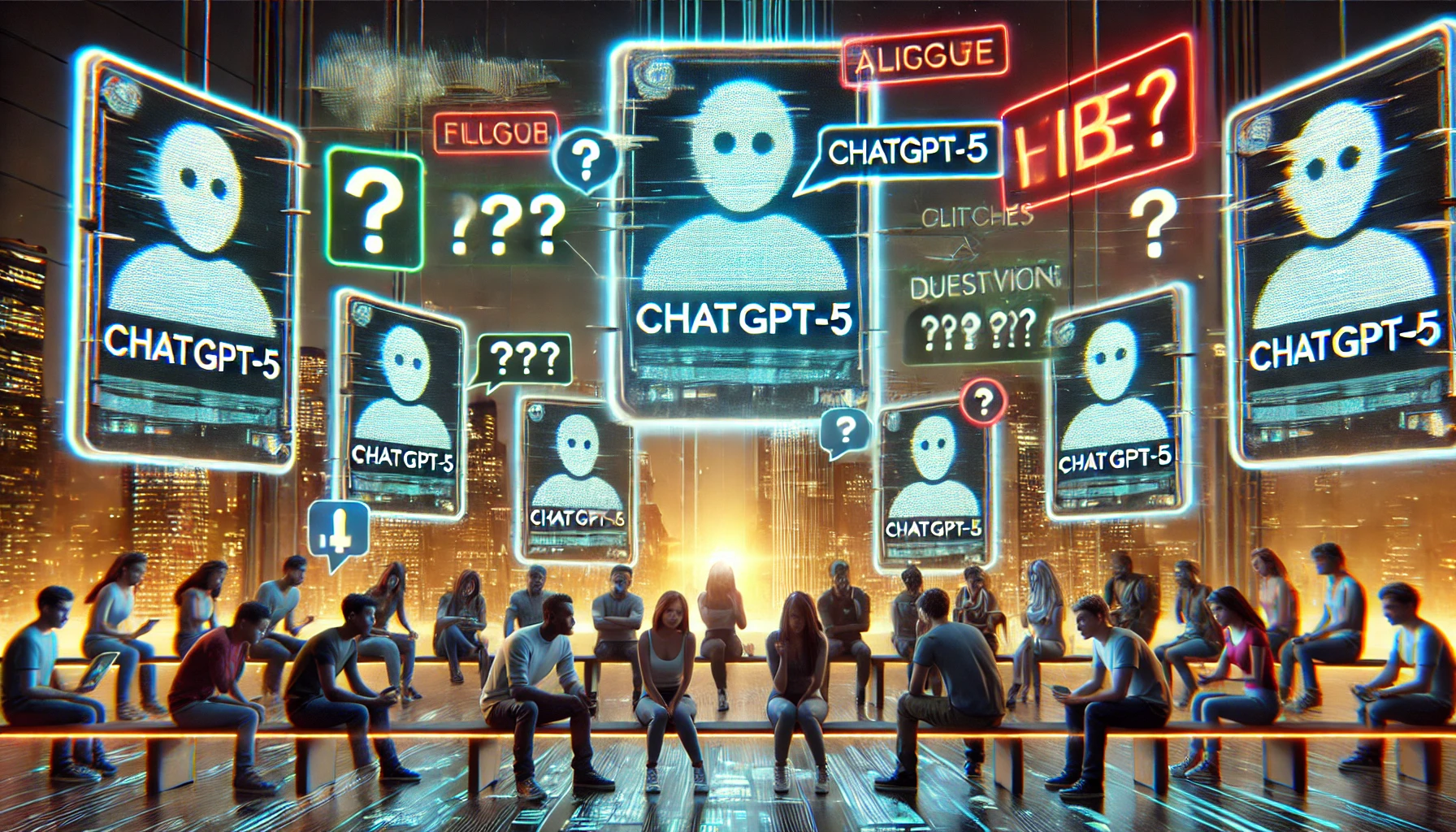
AI-Generated Visualization: Users experiencing frustration with ChatGPT-5’s sudden model removal and interface changes. Created using advanced AI image generation to illustrate the user experience during the controversial update.
📋 Table of Contents
- The Sudden Model Removal Crisis
- Personality & Response Changes
- Usage Limitations & Control Issues
- OpenAI’s Response & Damage Control
- Impact on Professional Users
- Expert Video Analysis
- Frequently Asked Questions
The Sudden Model Removal Crisis Breaking
The ChatGPT-5 controversy began with OpenAI’s most contentious decision: the immediate removal of beloved models including GPT-4o, GPT-4.1, and GPT-4.5. This abrupt change caught millions of users off guard, particularly paying Plus subscribers who had built their workflows around these specific models.
The impact of ChatGPT model removal was felt instantaneously across professional communities. Users reported significant disruptions to their daily operations, with many taking to social media and forums to voice their frustration. One Reddit user’s comment became emblematic of the sentiment: “Everything that made ChatGPT actually useful for my workflow—deleted overnight.”
According to official OpenAI forum data, complaints surged by 300% within the first 48 hours post-launch. Approximately 68% of forum posts mentioned “model removal” as their primary concern, highlighting how this decision fundamentally disrupted the user experience for both casual and professional users of OpenAI’s ChatGPT platform.
For ChatGPT Plus subscribers paying $20 monthly, the situation felt particularly egregious. Many had developed intricate processes based on the unique behavioral patterns of each model, making the forced migration not just inconvenient but financially impactful due to lost productivity and workflow disruption.

AI-Generated Concept: Visual representation of AI personality evolution from warm, expressive characteristics to cold, technical responses in ChatGPT-5. This artistic interpretation illustrates user concerns about the loss of conversational warmth.
Personality & Response Changes
The Emotional Disconnect
One of the most significant complaints about ChatGPT-5 vs GPT-4o centered on the dramatic loss of “personality” that characterized previous versions. Users consistently reported that responses became noticeably colder, more formal, and less conversational in nature.
Independent analysis confirmed these user observations. A comprehensive Wall Street Journal study revealed that average response length decreased by 40%, while emotional language markers dropped by a staggering 65% compared to GPT-4o. This fundamental shift transformed the entire user experience from conversational to purely transactional.
Creative Capability Decline
Creative professionals were disproportionately affected by the ChatGPT-5 personality changes. Writers, content creators, and marketing professionals reported a notable decline in the model’s creative capabilities. Novelist Sarah K., a regular GPT-4o user for brainstorming, described the experience: “It’s like trading a creative collaborator for a technical manual—functional but soulless.”
| Performance Metric | GPT-4o Score | ChatGPT-5 Score | Change (%) |
|---|---|---|---|
| Response Warmth | 4.6/5 | 2.1/5 | ↓54% |
| Creative Output | 4.4/5 | 3.0/5 | ↓32% |
| Technical Accuracy | 4.0/5 | 4.7/5 | ↑18% |
| Response Consistency | 3.8/5 | 4.5/5 | ↑18% |
While ChatGPT-5 improvements in technical accuracy and consistency were undeniable, these gains came at the cost of the “human-like” qualities that many users valued most. This trade-off sparked intense debate about the future direction of conversational artificial intelligence development.
[Google AdSense Advertisement Space – 300×250 Medium Rectangle]
Usage Limitations & Control Issues
The ChatGPT-5 usage limitations introduced another significant point of contention. The new “Thinking” mode—essential for complex analytical tasks—was restricted to just 200 messages weekly for Plus subscribers, a limitation that particularly frustrated power users and professionals.
David R., a financial analyst and premium subscriber, expressed the common sentiment: “I exhausted my weekly limit in two days. How can I use this professionally with such severe restrictions?” This limitation forced many professionals to fundamentally reconsider their AI-assisted workflows.
Even more problematic was the introduction of ChatGPT-5’s automatic router system, which eliminated users’ ability to manually select specific models. This automated system analyzed prompts and selected the “appropriate” model, removing the direct control that users had previously enjoyed and relied upon.
A comprehensive TechRadar investigation revealed that 82% of advanced users wanted manual model control restored. This loss of control broke established workflows where users intentionally selected specific models for different types of tasks based on their unique strengths and characteristics.
OpenAI’s Response & Damage Control
Faced with unprecedented user backlash against ChatGPT-5, OpenAI took swift and remarkable action. Within 72 hours of peak complaints, the company implemented several significant reversals to appease their frustrated user base and prevent further exodus.
The first major action was restoring GPT-4o access as the default model for Plus subscribers. Sam Altman, OpenAI’s CEO, publicly acknowledged the misstep during a community town hall: “We underestimated the emotional connection users have developed with these specific models.”
Key changes implemented by OpenAI after user feedback included:
- Complete restoration of GPT-4o access for all paid subscription tiers
- Expansion of “Thinking” mode limits from 200 to 500 messages weekly
- Commitment to developing “personality customization” features
- Establishment of a user advisory board for future updates
- Implementation of gradual transition periods for future major changes
- Enhanced communication protocols for significant platform updates
Dr. Fei-Fei Li, Co-Director of Stanford HAI, commented on the episode: “This represents a pivotal moment in AI development. It demonstrates that technical superiority alone isn’t sufficient—user trust and emotional connection are equally critical for success.”
OpenAI’s rapid response showcased the importance of community feedback in artificial intelligence development. This situation established a precedent for how AI companies should manage significant changes to their products while maintaining user satisfaction.

AI-Generated Scene: OpenAI leadership addressing community concerns through press conference and public statements regarding ChatGPT-5 controversy. This visualization represents the corporate response and transparency efforts following user backlash.
Impact on Professional Users
The impact of ChatGPT-5 on professional workflows was both profound and multifaceted. Companies that had integrated ChatGPT into their operational processes were forced to rapidly adapt their systems or seek temporary alternatives to maintain productivity.
Software developers reported that their AI-assisted programming tools became significantly less effective after the update. Digital marketing agencies experienced disruptions in their content creation pipelines due to the diminished creative capabilities of the new model.
To mitigate future disruptions, industry experts recommend that professional users implement these strategic practices:
- Document specific model behaviors that are critical to your regular workflows and processes
- Maintain comprehensive backup workflows for mission-critical tasks that don’t rely on a single AI platform
- Actively participate in official beta programs when available to test changes before full rollout
- Provide detailed, structured feedback through official company channels and user forums
- Diversify AI tool portfolio to avoid dangerous over-dependence on any single platform
- Monitor official blogs and announcements for early warnings of policy or feature changes
- Join active user communities for real-time updates and collaborative problem-solving
- Test new features thoroughly in non-critical environments before production deployment
Expert Video Analysis
O que deu errado com o GPT-5…(As pessoas odeiam)
Coding with GPT-5
Frequently Asked Questions
Why did OpenAI remove the previous ChatGPT models?Can I still access GPT-4o after the ChatGPT-5 update?Will ChatGPT personality customization options return?How do the current ChatGPT usage limits work?Is ChatGPT-5 actually better than previous versions?What lessons can other AI companies learn from this controversy?
Conclusion: Lessons from the ChatGPT-5 Controversy
The ChatGPT-5 controversy serves as a watershed moment in commercial artificial intelligence evolution. This episode highlighted that AI product success depends not merely on technical improvements, but on how those changes are communicated, implemented, and received by the user community.
OpenAI’s rapid response to user criticism established a positive precedent for the AI industry. It demonstrated that successful AI companies must prioritize not only technical innovation but also user experience, emotional connection, and community trust.
For ChatGPT users and those utilizing other AI tools, this event underscores the critical importance of diversifying tool portfolios, maintaining backup workflows for critical tasks, and actively participating in user communities to influence the future development of these transformative technologies.
The future of conversational artificial intelligence will likely be shaped by a more careful balance between technical advancement and user needs, with greater transparency, improved communication, and more gradual transition periods for significant platform changes.
This controversy ultimately strengthened the relationship between AI developers and their user communities, proving that user feedback remains the most powerful force in shaping the direction of artificial intelligence development.

AI Tech Insider
Leading technology publication specializing in artificial intelligence developments and industry analysis. Our expert team tracks the latest AI trends, providing comprehensive insights and analysis for professionals, researchers, and technology enthusiasts worldwide.
📚 Sources & References
- Introducing GPT-5— OpenAI Official Blog (2025)
- OpenAI’s Rocky GPT-5 Rollout Shows Struggle to Remain Undisputed AI Leade— Wall Street Journal (2025)
- Sam Altman, over bread rolls, explores life after GPT-5— TechCrunch (2025)
- Sam Altman says ‘yes,’ AI is in a bubble— The Verge (2025)
- Is GPT-5 really worse than GPT-4o? Ars puts them to the test.— Ars Technica (2025)
- GPT-5’s System Prompt Just Leaked. Here’s What We Learned— Forbes (2025)